Monday, December 15, 2014

John Brennan Gets Orwellian On Us

Photo Credit: Reuters
In light of the newly released Senate report on the CIA's "enhanced interrogation methods" (also known as torture, to us normal folks), documented liar and CIA chief John Brennan gave a rather interesting speech. I mean that not in the sense that it was actually interesting to listen to, because based on what I saw of it, Brennan makes Noam Chomsky's speeches sound bombastic in their energy. No, rather, it was interesting because of how shockingly Orwellian it was. I thought I'd take the opportunity here to look at it bit by bit.

"It was 8:46 a.m. on the morning of September 11th, 2001, when the North Tower of the World Trade Center in New York City was struck by an aircraft commandeered by al-Qa’ida terrorists. Seventeen minutes later, the clear blue skies over Manhattan were pierced yet again by another hijacked aircraft, this one tearing into the adjacent South Tower." Ah, good. Glad to see we're still using 9/11 to excuse everything we've done wrong for the last thirteen years. It hasn't gotten old or tired at all yet. And--no exaggeration--the first five paragraphs of Brennan's speech are basically just recounting 9/11. I'm not trying to be insensitive; I realize that, for every American old* enough to remember it (myself included), it's not something that will be forgotten, nor should it be. But it's downright disgusting to use it as a distraction from the wrongdoings of our own government, as Brennan does here.

These first five paragraphs expose a great deal already, as Brennan prattles on about how the Pentagon is "the proud symbol and heart of our Nation's military" and how the terrorist attacks would "plunge us into a seemingly never-ending war." Because, you know, it wasn't our choice to invade countries, or bomb them, or use drone strikes--we had to. The terrorists made us do it, so don't blame us.

Throughout the first dozen paragraphs of Brennan's speech, he goes to great pain to reinforce the simple, black-and-white narrative that al-Qaeda are the bad guys and the CIA are the good guys, going so far as to call al-Qaeda "an evil we couldn't fathom." It's amazing that any public official can use this sort of hyperbole without being laughed at. Killing innocent civilians as a means of achieving your goals? Oh, yeah, God knows the US, and the CIA in particular, could never fathom that level of evil.

Finally launching into the discussion of the detention program and the torture employed against some of the detainees, Brennan states that "EITs" (quite the cozy little acronym, isn't it?) were "determined at the time to be lawful [by the Department of Justice] and...duly authorized by the Bush Administration." Yes, "determined" to be lawful. Because, of course, the DOJ doesn't just "determine" anything lawful whenever it's convenient for it. Oh, and the Bush administration authorized it. So don't blame us, guys.

Brennan, while claiming to agree with Obama's stance against torture, argues that "the previous administration faced agonizing choices about how to pursue al Qa’ida and prevent additional terrorist attacks" and that "whatever your views are on EITs, our Nation – and in particular this Agency – did a lot of things right during this difficult time to keep the country strong and secure." Sure. That's it. That's why we're so safe now, right? Oh wait, I forgot, we're supposedly in grave danger of a terrorist attack at any time, which is why we need those NSA programs, and the PATRIOT Act, and the new war against ISIS. Funny how that works, isn't it?

Finally arriving at the point in his speech where he addresses the report he's supposedly responding to, Brennan states that "we gave the effort our full support, providing an unprecedented amount of sensitive CIA documents to the [Senate] Committee and devoting considerable resources to help it with its review." Right, and, you know, spying on their computers, but why mention that ugly little detail? Claiming that the Committee's methods were "flawed," Brennan nonetheless says much of it is line with what the CIA itself has concluded, and that "[a]cknowledging our mistakes and absorbing the lessons of the past is fundamental to our ability to succeed in our mission and is one of the great strengths of our organization." Right. "Mistakes." The CIA doesn't commit crimes against humanity or act with utter disregard to human life, it just makes "mistakes" every once in a while.

The use of this euphemism becomes particularly comical right after, as Brennan tells us that "[i]n a limited number of cases, Agency officers used interrogation techniques that had not been authorized, were abhorrent, and rightly should be repudiated by all. And we fell short when it came to holding some officers accountable for their mistakes." Even when CIA officers take unauthorized and "abhorrent" actions, they're still just mistakes. This is like if the pope gave a speech about the "mistakes" some priests made when they were alone with little boys.

Brennan goes on, "It is vitally important to recognize, however, that the overwhelming majority of officers involved in the program carried out their responsibilities faithfully and in accordance with the legal and policy guidance they were provided. They did what they were asked to do in the service of our Nation...those officers’ actions should neither be criticized nor conflated with the actions of the few who did not follow the guidance issued." That's right, CIA officers are now beyond criticism as long as their following the agency's "guidance." Hey, who can blame ya when you're just following orders, after all?

And, again, when "representations about the program that were used or approved by Agency officers were inaccurate, imprecise, or fell short of our tradecraft standards" that was just another instance of "mistakes" the CIA made--certainly not deliberately misleading the public, as the Senate report concluded the CIA had done. In any case, "[w]e have acknowledged such mistakes, and I have been firm in declaring that they were unacceptable for an Agency whose reputation and value to the policymaker rests on the precision of the language it uses every day in intelligence reporting and analysis." Right. The agency whose head refers to torture as "enhanced interrogation techniques" relies on precision of language.

"One of the most frustrating aspects of the Study," says Brennan, "is that it conveys a broader view of the CIA and its officers as untrustworthy." Yeah, geez, guys, how could you portray a secretive agency that recently spied on members of Congress and has supported numerous dictators and human rights violations as being untrustworthy? What's next--we'll be accusing the KKK of being racist?

After a few final paragraphs of sickeningly self-laudatory statements about the CIA ("Most CIA successes will never be known, as we are an intelligence service that carries out its mission without fanfare and without seeking praise." Riiiiiggght, that's why the agency is so unwillingly to talk about its "accomplishments."), Brennan's speech finally comes to a close. Never have I read a better example of the way in which public officials lie, distort the truth,  and cloak the most despicable policies with sophisticated language and euphemisms. As George Orwell himself put it, "Political language...is designed to make lies sound truthful and murder respectable, and to give an appearance of solidity to pure wind." I'll close on that note, as I don't think any quote could better respond to this speech.


*NOTE: This post originally said "everyone American enough" where it was intended to say "every American old enough;" the first version was a typo.

Monday, December 1, 2014

Wilson's Non-Indictment: An Engineered Failure


I guess I’m a bit late in talking about Ferguson, but it doesn’t seem to be an issue that’s disappearing in any hurry (nor should it), so I’ll address it, or at least one aspect of it. Darren Wilson, as we all know by now, was not indicted for his killing of Michael Brown. I don’t think this came as a surprise for too many people (it didn’t for me), nor should it have. It’s the result that’s entirely predictable—the system protected one of its own. Darren Wilson’s resigned now—can’t keep around someone who causes that sort of controversy—but we’ll have no criminal trial, at least not by the state of Missouri. He walks away a free man, albeit one who’ll have to look over his shoulder for a long time.

I’ll be blunt: based on what I’ve heard and seen, I think Wilson should have been indicted. Of course, that doesn’t mean an intelligent couldn’t disagree with my assessment, and it’s certainly true that I haven’t gone through every bit of evidence that was presented to the grand jury, but from the substantial amount I have heard, it seems like there should have been an indictment unless there was some piece of evidence that clearly exonerates Wilson (and I think we would have heard about it if there were). But that’s not really the point. The point, this whole process was obviously engineered to get Wilson off the hook while everyone else pretended they did their job.

Bob McCulloch, the prosecutor, defied the norm of how to handle a grand jury in numerous ways. Instead of just making the case for a certain charge and presenting the relevant evidence—you know, like you’re supposed to do—he allowed a huge evidence dump and essentially told the grand jury to make their own decision. He barely did anything to insinuate the idea that Wilson could be a murderer (thus failing completely to do his job as a prosecutor), and basically let Wilson get away with a story that was inconsistent with what he’d originally claimed, and not very believable to begin with.

And why not? McCulloch was a local prosecutor. As the attorney for Michael Brown’s family puts it, his relationship with the police department is “symbiotic,” not adversarial. Why would he want to expose wrongdoing on the part of a criminal justice system he was part of? McCulloch was never on the side of Michael Brown’s family, or those who wanted justice. His speech after the grand jury’s decision largely complained about how much the media focused on the case.

Why was someone like McCulloch allowed to be prosecutor for this case, rather than being replaced by a special prosecutor, as one might expect he should be? Because Governor Jay Nixon decided not to do so. This is the same governor who was blatantly more concerned with the violence of the protestors rather than the violence of the police, yet another shameless servant of the blatantly corrupt establishment. What would Nixon have had to gain from Wilson’s indictment? A police officer who served in an area where the police are infamously disproportionately white, while the residents are largely black, being charged with manslaughter, or even murder? It would just be another mess he would be expected to take care of as governor. Why not just sweep it under the rug?

And should we be surprised at all that the grand jury was seventy-five percent white? Indictment already requires nine votes in favor, and, in a racially charged case, even if all the black jurors and a majority of white had voted in favor, that still wouldn’t have been sufficient. And these are jurors selected from St. Louis county, home of a major city almost half of whose population is black. Could a more even balance really not have been achieved? I’m not by any means trying to say you can’t be white and have an unbiased view of this case (I’m white myself, so that would be pretty absurd), but nearly half of white Missourians voted for Todd “Legitimate Rape” Akin in 2012 (based on exit polling); it’s hard for me to believe, given the complete (and probably deliberate) incompetence of the prosecution, that at least a few backwoods, cop-worshipping people (the type who also tend to associate young black men with being dangerous and violent) didn’t end up on the grand jury, and a few is really all it would take.

One question remains: why would McCulloch release all the evidence shown to the grand jury? It basically shows what an awful job he did, and what a joke the proceedings were, and it’s not standard to released that evidence, so why do it? Admittedly, this is pure speculation on my part, but maybe he hoped it would provoke a reaction. If we can hear about angry, violent, frequently black protestors, it makes it all the easier to distract from the issue of corruption in police forces across the country, and the continuing unfairness of police toward blacks in America. As long as Middle America feels uneasy, questions about police brutality and militarization can be pushed aside for the time being.

The entire proceeding was a joke, and was designed not to indict Darren Wilson. Wilson has been forced to resign; McCulloch and Nixon should be, too. Their disgusting and almost certainly deliberate mishandling of this case should earn them ostracization by the rest of the country. In a fairer country, it would. But we’ve just been reminded that our country is nothing resembling fair. Too bad the only people who believed it was are too deluded to change their mind at this point.

Tuesday, November 18, 2014

The Limits of Discussion


An interesting thing happened to me recently. In one of my classes (a philosophy class), as part of the curriculum, we were having a discussion on illegal immigration. This is an issue that I think I’m pretty moderate on; I basically support patrolling the border more effectively and giving some kind of visa to the illegal immigrants already here, as long they aren’t guilty of any serious crimes, then creating a pathway to having a green card and, in time, citizenship—essentially, the provisions of a bill the passed the Senate with bipartisan support last year.  But in this discussion, I quickly got myself deemed “extreme” by no less than the professor himself. My “extremism” was stating the well-established fact that policies the US has adopted have damaged Mexico and Latin America, and thus increased illegal immigration to the US. And my professor even seemed to agree that I had a point; but, somehow, my point of view was still “extreme.”

This is a good illustration of how narrow the parameters are when it comes to “acceptable” viewpoints within the United States. We have been trained as a society to immediately consider someone an extremist if they promote a certain idea—even if it’s an idea that has all the evidence in the world to back it up. Take the idea that Dick Cheney is a worse criminal than Osama bin Laden; it’s a view that shouldn’t even be controversial. Bin Laden never invaded a country needlessly and took the lives of perhaps hundreds of thousands of civilians; and yet, it’s just a fact that we’re expected not to acknowledge. If you do acknowledge it, you’re immediately considered to be a radical and an extremist.

Conveniently, we also embrace the idea, as a society, that radicalism and extremism are inherently bad. This, of course, makes absolutely no sense on a historical level, considering the people we venerate were frequently considered radicals in their time (we’re a nation founded by a bunch of guys who decided it was appropriate to commit treason against the government they lived under at the time, which is a pretty radical idea by any definition). The end result is that, by just stating facts, you can essentially discredit yourself and end up being completely marginalized by society. Take Noam Chomsky; has the average American even heard of him? He’s one of the most well-known left-wing figures across the world. Hugo Chavez recommended one of his books at the UN (of course, being recommended by the evil Chavez would discredit him in many Americans’ eyes), and yet the mainstream American media would rather have on people like Newt Gingrich and Ann Coulter, who have absolutely no interest in basing any of their arguments on facts, as opposed to Chomsky’s consistent reliance on well-established facts sources for his arguments.

How is it that America has gotten to point where acknowledging certain facts makes you an extremist, and yet you can hold up Ronald Reagan (apartheid-supporter, race-baiter, financial backer of terrorist groups) and still have mainstream credibility? A little thing called the corporate elite. Notice how a lot of the “extreme” views we shun would lead to positions inconvenient for big business, the military-industrial complex, and all their oligarch pals. The state-corporate establishment has succeeded in turning “socialist” into a dirty word, and vilifying anyone who challenges the idea that capitalism is at least a necessary evil, if not a positive good. Figures like Bernie Sanders and Elizabeth Warren, who hold views that would be considered center-left in a lot of European countries, are viewed as part of some hard-left fringe in the United States. Anyone more radical than them is pretty much insane, ipso facto, and not worth trusting about anything.

Corporations own the US media; they have enough money to exert enormous influence over who will and who won’t get elected. It only stands to reason that what we end up hearing from the media, and from many political figures, conveniently supports the agenda that is backed by these corporations. And, over the past decades, as corporations have become more powerful and more concentrated, the “acceptable” viewpoints to hold have shifted farther and farther to the right. Perhaps that’s not a coincidence.

We live in a society where viewpoints can generally not be punished by sheer violence, unlike, say North Korea, or the old Soviet Union. Subtler, more insidious ways have to be found to reinforce the parameters of acceptable thought. That means that, rather than refuting inconvenient views with facts—which they can’t do—the corporate elite just assassinates the character of anyone who holds them, and propagates the idea that anyone who thinks like that must be crazy.

In a Foucaultvian sort of effect, people internalize the parameters of acceptable viewpoints and discussion, and, naturally, avoid saying things or taking views that would be seen as extreme. After all, the people who have those views are crazy—you’re not crazy, are you? Surely, you can’t agree with them.

We may, however, be witnessing a serious challenge to that. Polls over the years have shown surprisingly high numbers of people in the 18-29 age group have a positive view of socialism. They also deviate strongly from the “acceptable” positions when it comes to issues like Israel, as when 18-29-year-olds viewed the recent attack on Gaza as unjustified by 2-1 margin. My “extreme” position in my class managed to get the support of maybe ten or so people, for that matter (out of a class of roughly thirty). This is a potentially hopeful sign. Let’s just hope we’re not at a point where it’s not too late to change course.

Thursday, November 6, 2014

The Democrats Deserved to Lose


So the great farce that passes for an election season in the United States is now over, and it’s clear that Tuesday night was not a good night for the Democrats, who lost their Senate majority, were pushed further into the minority in the House, and failed to unseat some of the governors they most despise (Scott Walker, Rick Scott, et al). So the fanatical, terroristic extremists of the Republican Party have gained more power, in a piece of bad news for both the country and everyone outside of the corporate elite. But, you know what? I’m not exactly feeling too bad for the Democrats, because, to be honest, they completely brought this on themselves.

I’ve heard it said before that the Republicans don’t give any vision in terms of what they want America to be, but I think that’s wrong. The Republicans do give a vision—it’s a land where the economy is booming, the government is off everyone’s back, the deficit is gone, and everyone holds the values laid out in the Bible as the central tenets of our society. It’s a vision that’s an utter fraud, but it’s still a vision. The Democrats, on the other hand, on the ones not providing any vision whatsoever.

Just think about it—Obama’s had six years in office now, and the Senate has been in Democratic hands the whole time. What bold, visionary pieces of legislation have been put forward? We have a watered-down healthcare bill and a practically toothless Wall Street reform bill. That’s pretty much it. And I’m not just talking about what’s been passed—what’s even been proposed? I’m not some great admirer of the Democrats of days past, but people used to actually hear about a Great Society or a New Deal or something along those lines. That presented a vision. What do we have now that’s comparable?

And for those who want to defend Obama, don’t just tell me, “well, he couldn’t get anything passed because of the Republicans.” True, but that’s not an excuse not to try. Back in the 1940’s, with the Republicans in control of Congress, Harry Truman (not a president I’m a big fan of, for quite a few reasons, but often a politically competent one) proposed a whole slew of bills just to see pretty much all of them get rejected, not really to anyone’s surprise. And he used that fact against the Republicans successfully, to win reelection in 1948 and sweep the Democrats back into power. Now, midterms are generally bad for the president’s party, particularly when the president is six years into his time in office, but maybe if Obama had done something like Truman did, these midterms could have turned out at least a little differently.

Instead, what we’ve gotten is capitulation and compromise from a President who won a pretty decisive reelection in 2012, and whose party made gains in both houses of Congress, against a lot of early predictions. Like it or not (and I’ll be the first person to say I absolutely hate it), American elections are basically about PR—they’re largely about selling a product. Imagine a series of ads for a product that say something along the lines of, “Well, no one really likes our product, but we’re putting it out there to address a real problem, and we think it’ll do at least a little good.” Who would buy that, exactly? But when, with the Senate and presidency under their control, all the Democrats have done is offer weak, uninspiring compromises in lieu of any actual agenda, that’s the only message they have to run on.

But their ineptness in terms of PR is not at all the only reason, or even the main one, that Democrats deserved to lose this election. Rather, it’s the fact that they’ve broken every promise they made to average Americans. Remember how homeowners were supposed to be bailed out, and not just big banks? Why is it that never happened? Why is it that the national security state put into place under Bush has expanded instead of being rolled back? Why is it that the president that decried Bush’s Iraq War now has us getting entangled in a mess in Iraq and Syria by arming rebels that are fighting against a regime that’s enemies with the group we’re supposed to fighting? Where is the economy that works for everyone? And yes, I know that Republicans have stood in the way of solving some of these problems, but even when Obama’s had the power to act on his own in relation to these issues, his actions have usually made things worse, if anything.

I think that Franklin D. Roosevelt’s legacy is far more flawed than a lot of people realize, but there’s no doubting that he presented a vision, and, in a lot of ways, he enacted it successfully; the New Deal’s legacy lasted for decades, and it was a great time for the middle class in America. He legitimately did do a good deal to help middle- and lower-class Americans and curb corporate power, and programs in that same vein were at least proposed, if not always enacted, by the Democratic presidents that followed him. Now it seems that the Democrats have just given up standing for anything, and still somehow hope to get elected. As Frank Zappa said, “Republicans stand for evil, corruption, manipulation, greed…The Democrats have no agenda, and when they speak on any topic, they want to sound as Republican as possible.” And, as Truman noted, “The people don't want a phony Democrat. If it's a choice between a genuine Republican, and a Republican in Democratic clothing, the people will choose the genuine article, every time.”

Of course, this isn’t to say I’m happy that the Republicans won. I wish the Democrats could have won every seat that was up for election, just because I’d prefer a bunch of lousy corporate hacks be in power rather than the vile not-so-crypto-fascists that comprise the Republican Party. But the fact that the Republicans didn’t deserve to win doesn’t mean the Democrats did—they didn’t, either, and, while the vision the Republicans have for the country is loathsome and disgusting, the Democrats have themselves to blame for not presenting any vision whatsoever. So, to everyone in power in the Democratic Party, have fun with your defeat. You really did earn it.

Tuesday, November 4, 2014

In Defense of Non-Voting


So, since it’s Election Day now, I thought I might as well address a few of the platitudes about voting we always seem to be told. As I’ve mentioned before, I’ve filled out (and now mailed out) an absentee ballot, so I’m not making excuses for myself here—rather, I’m just countering some of the propaganda that I hear floated around and that I think is truly damaging.

First is everyone’s favorite, “if you don’t vote, you have no right to complain.” Now, George Carlin addressed that point (in a video I already linked to in my post about Russell Brand), and he did so more amusingly than I probably can, but I’d like to actually address it seriously. What sort of screwed up logic is this? And I don’t mean that as a joke—seriously, how can anyone believe something so bizarre and absurd? You know, North Korea has elections—you just don’t have a real choice in terms of who you’re voting for. No one would dream of telling North Koreans that if they don’t participate in those show elections, they have no right to complain. Now, obviously, we live a country much freer and much happier than North Korea (thankfully), but let’s be honest—our elections don’t offer that much of a choice, either. It’s pretty much a proven fact at this point that a lot of government policy is not going to be changed very substantially regardless of who wins the next elections.

So, of course, if you don’t vote, you still have a right to complain. You could complain, for instance, about how we have a system in which things really pretty much stay the same, regardless of whether you vote or not. Among the many reasons you could have for not voting is that the candidates are both too inimical to your values for you to offer either your support; shouldn’t you have a right to complain if our “democracy” produces candidates that offensive to your values? The old “if you don’t vote, you have no right to complain” cliché is essentially taking for granted that if you do vote, there really is some chance that you’ll get the result that makes you happy—but that’s not the system we live under.

Another piece of brilliance that reliably crops up is that there are so many people out there who would give anything to be able to choose their government’s leaders, and so it’s disrespectful to them to throw away your opportunity to do so. Again, this is assuming that there is a real choice, and, in a lot of ways, there isn’t. We Americans are living under a government that is largely not accountable to us—we are part of the world that is unable to actually choose its own leaders, because no matter who we elect, the same group of corporate plutocrats will be there to influence their every decision.

Then there’s the whole thing about how voting is our “civic duty.” Duty to whom, exactly? The government? A government as unrepresentative as ours has no right to demand anything of its citizenry. To our fellow citizens? That’s just silly—they all have the right to vote; if one more person decides they want to stay out of the political process, that should be good news to everyone who decides to participate—it’s just one less vote in the whole system, and that makes all the ones that do get cast have that much more influence on the result. Is it our duty to ourselves to vote? Perhaps that argument would be convincing if the only reason not to vote was really out of laziness, but there are a lot of other reasons, and if you really can’t bring yourself to support anyone who’s running, you’re hardly doing yourself any favors to sacrifice your principles and vote anyway.

All of these arguments are predicated on the idea that we live under a system that really does give us an opportunity to choose our government and make a real difference, but in a lot of ways, that’s just not true. The voters have some influence, obviously, but a lot of the big decisions are out of their hands. The reason people abstain from voting is not necessarily because they’re just too lazy to inform themselves and do so; a lot of the time, it may just feel like an exercise in futility. And in many ways, it is.

So, you might ask, after saying all of this, why is it that I myself voted? Well, it does have some influence, minor though it is, particularly on a more local level (and many of the offices and issues I voted on were, in fact, rather local). I’m not encouraging non-voting, because, particularly when we have a political party that’s gone as absolutely off-the-rails insane as the Republicans have at this point, it does make some difference who wins. But I’m always going to be a voter who sympathizes with those who don’t vote as an act of protest, because I agree with them that there’s a hell of a lot that will stay the same no matter who gets elected. Perhaps the one thing to keep in mind as a bizarre sort of consolation is that, regardless who wins this election, we’re still pretty screwed as a country.

Monday, November 3, 2014

Is Bill Maher's Free Speech Under Attack?


I didn’t really plan on writing more about Bill Maher’s Islam controversy, but that was before he actually solicited my advice. Well, not mine personally, but that of “liberal college students,” of which I’m one. The issue at hand specifically is the call to revoke UC Berkley’s invitation to Maher to give a commencement speech, due to his recent comments about Islam. Berkeley is the home of the free speech movement, which, according to Maher, and a rather long article by Brian Levin, adds a particular layer of irony and hypocrisy to the whole matter.

First, let me address the actual campaign to disinvite Maher. I don’t support it. Although I think Bill Maher’s comments about Islam are offensive and I don’t accept his “Islam isn’t a race” defense against the charge of “racism” against him (criticizing Islam is one matter, championing our “liberal Western values” against the Muslim world’s is another), I still, on the whole, like Bill Maher. I agree with him probably the vast majority of the time, and he’s smart, and funny, and perfectly qualified to give a commencement speech at UC Berkeley.

That being said, I do kind of understand the campaign’s motivation. What Maher has said about Islam is genuinely problematic, and I do think it risks vilifying Muslims as a group. Bill Maher may have nothing against Muslims as people, as evidenced by his willingness to talk and be friendly with Reza Aslan, but when you promote the idea that a religion or ideology is fundamentally linked to violence and theocracy, it’s hard for that not to in some way turn into attacks on those who follow it. This isn’t helped by Maher’s repeated implication that the problem really is with Muslims as a group (such as when he challenged Charlie Rose to find him a moderate Muslim, as if it were on par with finding a four-leaf clover, or something). Maher himself has made it clear that he’s attacking Islam in ways he doesn’t attack Christianity or Judaism, and so, if I were a Muslim, I can’t help but think I might sort of feel a little alienated. Still, on the whole, I think Maher has demonstrated that he doesn’t have some sort of malice or ill will toward Muslims, and I think the things I noted before do properly qualify him to be the commencement speaker.

However, what I really take issue with here is the idea that those campaigning to disinvite Maher are somehow threatening his free speech. I sincerely can’t believe I have to lecture liberals about this, but choosing not to associate with someone because of what they say is not, and never will be, a violation of their free speech. If there were a movement to prevent Maher from every setting foot on the campus of UC Berkeley due to what he’s said about Islam, that would be one thing; but we’re talking about giving the commencement address, which is not something they would offer to anyone. Naturally, what someone says and does will, and should, have an impact on whether they will be offered the opportunity to give a commencement address. There’s a reason UC Berkeley didn’t invite David Duke to give the address, and the fact that he wasn’t invited doesn’t infringe on his rights to free speech, either.

Brian Levin quotes former New York City Mayor Michael Bloomberg as commenting:

“It has been disturbing to see a number of college commencement speakers withdraw -- or have their invitations rescinded -- after protests from students and -- to me, shockingly -- from senior faculty and administrators who should know better.... In each case, liberals silenced a voice -- and denied an honorary degree -- to individuals they deemed politically objectionable. This is an outrage.”

This is just an absurdity, even disregarding the audacity it takes for someone like Bloomberg to pretend to be defending people’s rights. No one is “silenced” by having their invitation to give a commencement speech revoked; Bill Maher has his own TV show. Does he, or anyone else, really believe that by not being invited to give the commencement speech at UC Berkeley, he’s actually being “silenced?”

As for the idea that it’s somehow “an outrage” to oppose having someone as commencement speaker because of their political views, this is also completely ridiculous. If someone were discovered to have neo-Nazi ties, should a university still have them as commencement speaker (and, as Bloomberg notes, award them an honorary degree)? The ideas of tolerance for others’ viewpoints should not extend so far that people with truly heinous viewpoints should be given all the same honors and opportunities that anyone else could receive. You’d think that Bill Maher, of all people, with his championing of the idea that religions are not all equal, would understand why political views are also not all equal.

No, the question here is a much more narrow one: whether Bill Maher has really said or done anything to deserve having his invitation from UC Berkeley revoked. In my view, he has not, though I can’t claim to not at least understand why some people want him disinvited. Ultimately, though, as Reza Aslan has noted, I don’t think Bill Maher intends to promote some kind of bigotry or hatred against Muslims, nor do I think he himself is a bigot, even if his comments do somewhat reek of the idea that we Westerners are the more enlightened folk (which wouldn’t be so troubling except for how profoundly wrong that idea is, given the atrocities the West is guilty of). He should be the commencement speaker for UC Berkeley, and I’m sure his speech will be as witty and eloquent as he usually is, even when stating opinions I completely disagree with. I suppose, furthermore, I can understand why he and his supporters pulled the “free speech” card—it’s easy to object when suddenly people want to shun you for your beliefs. But that doesn’t make the objection any more sound, and if they don’t like being vilified by their opponents, they might want to avoid vilifying them back.

Thursday, October 30, 2014

The Delusion of American Exceptionalism


I know I’m not the first to say it, but American exceptionalism is an idea that really just needs to die. I’m sure that would seem unpatriotic to a lot of people, but I think that it’s actually the most patriotic thing one could propose at this point. I’d first like to explain, though, just what the problem with American exceptionalism is, and before that, even, just what American exceptionalism is.

American exceptionalism is, obviously, the idea that America is exceptional. Now, I want to emphasize that is not the same thing as just asserting America is unique—that would imply nothing in terms of its quality, just that it’s different from all other countries (and it is, that much is true). No, American exceptionalism would perhaps more accurately be called American supremacism, because, like every form of supremacism (white, black, male, female, Christian, Jewish, Muslim, etc.) the idea is that We are better than anyone else. Now, not surprisingly, this attitude runs rampant among (so-called) conservatives, but (so-called) liberals’ hands are not exactly clean either. Take the “inspiring” speech from then-candidate Obama back in 2008, when he stated that “in no other country on Earth is my story even possible.”

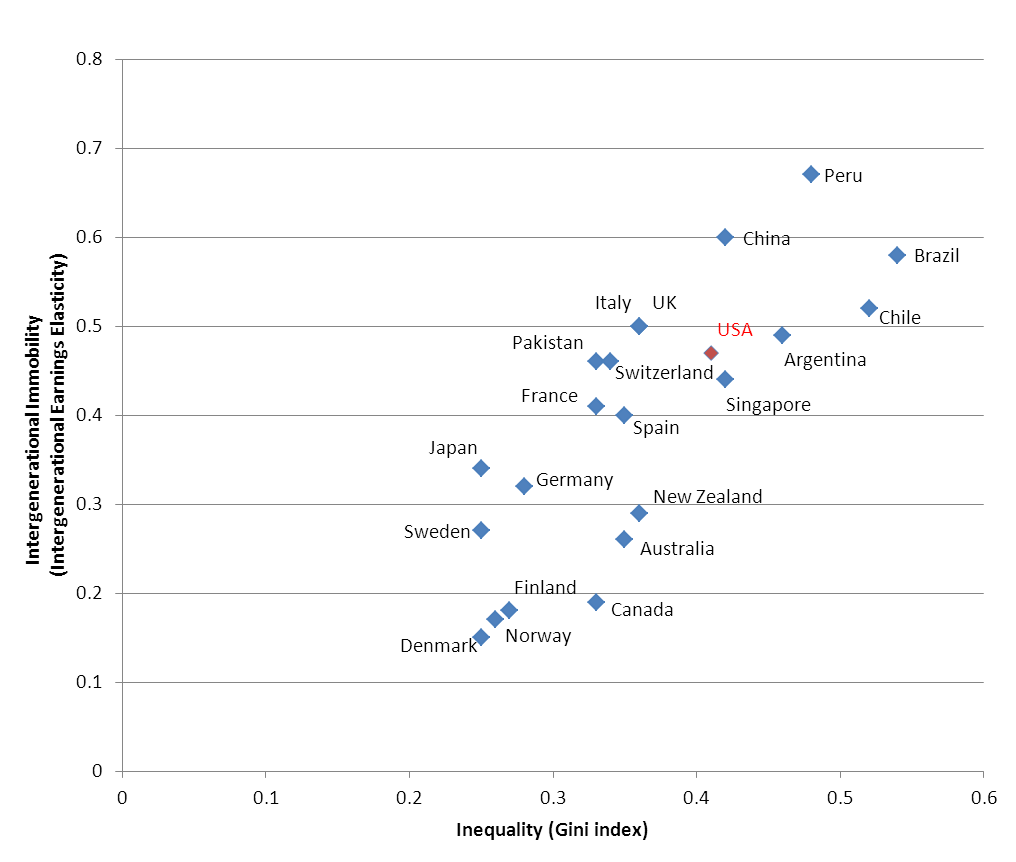
The first problem with this is that it’s utter bullshit. You’d be hard-pressed to find one category that the US leads the world in that’s even remotely positive. We don’t offer some unique opportunity for every American to succeed (we’re awful when it comes to social mobility) we haven’t been some great benevolent harbinger of democracy throughout the world (the truth is diametrically opposed to that), and Americans as a people are absurdly backwoods compared to any other similarly developed country. So, anyone who actually thinks we should be honest with ourselves just on principle is automatically obligated to oppose the idea of American exceptionalism.

America is, in fact, in a lot of ways, exceptional, but they’re not especially good ways. We lead the world in military spending and incarcerated citizens per capita (meaning we imprison more of our population than any of the authoritarian dictatorships we supposedly stand in contrast to), our healthcare system is an international embarrassment, and the number of creationists we have pretty much blows every other first-world country out of the water. Furthermore, we don’t have a good excuse for any of this; we’re essentially the richest country on Earth, so there’s no good reason for us not to be the best educated, most enlightened, most livable country on Earth—and yet, we’re none of those things. Not even close, really.

But besides from being dishonest, promoting the idea that we’re the best country in the world is counterproductive and dangerous. Every parent recognizes that if their kid has a report card full of C’s, the way to help them improve is not to tell them that they’re the best student in the whole school, and the same principle applies on a larger scale. For the idea that America is the greatest country on Earth to be coherent, one has to think there are legitimately fundamental aspects of our country that are better than any other in the world, which keeps us from addressing the obvious flaws that we have—it’s hard to address the lack of social mobility in the United States when you’re promoting the idea that we offer our citizens the best opportunities of any country out there.

American exceptionalism also prevents us from learning from other countries; so many people (both on the “left” and “right” of our political spectrum) reject the idea that the social welfare models of the Scandinavian countries and other European countries could possibly be the right approach here, because, of course, we’re America, and they’re not. While right-wingers virtually never promote a program or an idea on the basis that it’s been successful in other countries, “liberals”—at least those who are actually holding political office—don’t seem to do it all that much, either. At the heart of the problem is the fundamental arrogance that still exists in America and that results in us categorically rejecting the idea that we might actually be better off following the examples other countries have set.

Worst of all, though, is the easy cover American exceptionalism provides for the barbaric foreign policy the United States has consistently championed. For instance, in a completely deranged column, Dr. Keith Ablow advocated an “American jihad” of imposing governments based on our own, on the basis that “our democracy [is] superior to all other forms of government.” That overlooks the minor fact that our current system is, for all intents and purposes, a corporate oligarchy. In less extreme ways, the same idea, though, has been promoted by President Obama, who stated last year that America’s role has been that of “the anchor of global security.” True, if he means the security of corporate and government interests—as for the security of democracy and human rights, the counterexamples are too numerous to list here.

 I’m not asking for some gratuitous hatred of America or embarrassment to be American, but it’s time to outgrow the downright childish idea that we really are somehow better than any other country on Earth. There are no facts to back the idea up whatsoever, and it’s an idea that damages both us and everyone else. There are parts of American history to admire, and Americans throughout history to be inspired by, but unless we recognize the numerous ways in which we diverge from the ideas of democracy and individual rights that we’re supposed to represent, we’re going to keep down the same path we’ve been on for a long time. And it’s not a path that leads anywhere worth going.