Friday, February 17, 2017

"Womanhood Redefined": A Response

"Womanhood Redefined" by Natasha Vargas-Cooper is a wretched, doublespeak-laced chore of a read that I don't encourage anyone to suffer through. It puts forward one offensive claim after another, each time skittering away afterwards with enough qualifiers to try to appease anyone that could call it bigoted or hateful. It takes two steps forward, one step back, and a few steps side to side for good measure, and does that over and over again for five thousand words, dragging us along for the entire experience. But I guess I should actually address what it's saying instead of just how it's written.

First, let me address the issue that I, as a male, am critiquing this article about feminism: I don't care. I will put forward a series of arguments in this post. They might be good. They might be bad. But either way, they are good or bad totally irrespective of who's making them. I fully understand that I don't know what it's like to be treated as a woman by society, and just looking at the statistics is enough to give a good knowledge that it obviously comes with many unfair disadvantages. But this article isn't about the disadvantages that women face--not really, anyway. It's about how transgender people aren't really the gender they identify as, and how the transgender rights movement has gone too far, or something like that.

We first get several paragraphs about how the theater board of Mount Holyoke, a women's college, decided it would not be holding a performance of The Vagina Monologues because it is supposedly transphobic, given that it is about women with vaginas, which of course excludes some trans women. I agree that deeming it transphobic because of that is shortsighted and wrong, and that it doesn't deserve to be consigned to some dustbin of theatrical history just because it wasn't written to be inclusive to women without vaginas. Starting with this example, which many would find hard to argue isn't going too far, the article is just trying to warm us up to the idea that maybe a lot of the transgender movement is going too far. Maybe the whole idea of transgender is going too far. Or maybe not. You'll see what I mean.

Next, we hear about how Mount Holyoke is now admitting "men who [do] not have vaginas but nevertheless identif[y] as women"--Vargas-Cooper's cringe-inducing way of referring to trans women. "And that’s fine," she assures us. "Young people who have insisted that we treat those who are different with more acceptance and tolerance have tended to be on the correct side of history." Yes: trans women are really just men, but it's "fine" if women's colleges want to admit them, Vargas-Cooper generously grants us. Inclusivity and all of that.

She also admits that the "realistic aims" of the transgender movement--"access to sex-reassignment surgery and access to hormones...the ability to use the bathroom of one’s chosen gender; bureaucratic institutions issuing a preferred M or F on documents; and to be treated with the overall dignity a civilized human being should expect"---are "easy enough" to accept, offering all the enthusiasm of a friend agreeing that, yes, it is your turn to pick the movie, so we can go Fifty Shades Darker if that's what you'd really like. But now we hit the meat of her objections: "when we are told to concede that womanhood is a construction and not a matter of biology; that surgical mutilation is brave; that men who decide to become women are immune from criticism after they’ve taken a certain amount of estrogen; that expression of discomfort is bigotry; and that the cause of women’s political and economic liberation is somehow hindered if we alienate transgendered women or if we discuss the realities of women’s biology."

The lack of support for trans people begins to come through strongly here. Sex reassignment surgery becomes "surgical mutilation," and we're led to believe that the transgender movement is championing the idea that "men who decide to become women" (to use the author's gauche phrasing) are expected to become "immune from criticism." Who has argued that? No one--it's just a convenient straw man. And, just maybe, the argument against alienating trans women should be that they deserve to be included in the feminist movement too. Isn't that what social justice movements are supposed to be for? Do they really deserve to be called social justice movements if their only interest in including certain marginalized groups is pure expediency? Whether or not women's liberation is hindered by alienating trans women, it seems worth avoiding for the same reason one should avoid alienating any other group of women--a desire for fairness and inclusivity.

Vargas-Cooper goes on to puzzle over how "it’s unacceptably radical to believe that biological males who use hormones or surgeries, or who simply have an overwhelming desire to be women, are not automatically women" and that "having a vagina is an essential part of womanhood." Here is a curious thing: a man whose view of women puts a great deal of emphasis on their genitalia is likely to be considered an objectifier and a sexist, not without reason. Yet somehow it's empowering to view the possession of a vagina as an "essential part of womanhood." It encompasses, Vargas-Cooper helpfully explains, experiences such as "pregnancy, menstruation, abortion, adoption[!?], miscarriage, clitoral orgasms." These are not even things that all women with vaginas experience. Vargas-Cooper knows this, of course, but deliberately overlooks it.

The real problem, she contends, is "a strain in leftist utopian thought that biology is largely a myth or, in college dorm parlance, 'a construct.'" (I am not sure of how many college dorms have conservations about "constructs," but all right.) After quoting an article from BuzzFeed that argues that "woman" is "a made-up category, an intangible, constantly changing idea with as many different definitions as there are cultures on Earth," Vargas-Cooper deems it "the product of too much French post-modernist theory, not enough common sense, and a blatant denial of the constant biological war women are conscripted to wage."

What is that war, exactly? The war to not become pregnant, from what I can gather. Pregnancy, Vargas-Cooper says, is uniquely female. As per usual when it comes to trans-unfriendly feminists, she ignores the fact that trans men can become pregnant, and that they generally do not want to be considered female. To the question: "Do you only support women who bleed from their monthly cycles?" Vargas-Cooper responds: "That blood is a symbol of women’s ongoing war with nature. They use hormones, condoms, copper devices, and all manner of contraception to deny nature’s plans for them. When after 28 days they see their period, they know that they won that month." I do not think I have encountered many women who view their menses as a time of triumph, but I am glad for Vargas-Cooper that she apparently feels victorious about it. But what about women who don't menstruate, just by nature? What about, for instance, "Caster Semenya, who competed in the women’s 800 meter race, [and] was born with a vagina but no womb, no ovaries, and functional but undescended testes that produce testosterone"? Where did I get that quote about Semenya? From later in the article.

Vargas-Cooper goes on to argue that, in fact, transgender people are simple reinforcing gender. "Trans activists," she tells us, "insist that they be identified as either strictly male or strictly female." Curiously, the BuzzFeed article she was quoting (and attacking) is called "How to Be a Genderqueer Feminist"--genderqueer meaning, by definition, not exclusively male or female. Trans people, she says are "dreadfully serious...about their identities." Why can't they be "like the hijra of India, or...androgynous gender renegades like David Bowie, Patti Smith, RuPaul Charles, or the stone-cold butch lesbians of the ’70s who had zero regard for looking feminine yet did not opt for double mastectomies and testosterone infusions"?

Some of the hijra, in fact, are transgender--and there are (even aside from the hijra) transgender people who do identify as a third gender, as Vargas-Cooper so admires the hijra for doing. As for asking why transgender people can't be like Bowie, Patti Smith, or RuPaul--maybe because none of them are transgender. In fact, all of them are (or were) performers. Transgender people are not attempting to put on a show or make a statement, they are attempting to be comfortable in their own bodies.

"Once they’ve transitioned to their preferred gender," gripes Vargas-Cooper, "it’s considered a serious act of hostility to refer to them by their former pronoun. Style guides for news outlets like the Associated Press and Reuters instruct reporters to refer to people by their chosen pronouns. Meanwhile the New York Times is even willing to indulge those who use made-up pronouns like they/x (in place of he or she)." But this, too, is "fine," she grudgingly admits. "But," she asks, "why such dour emphasis on gender identity when it is somehow both arbitrary and sacrosanct?" No one has said that gender identity is arbitrary; it's a reflection of a person's deepest feelings about themselves. Not unreasonably, they ask those be respected by others. One is idly curious about how Vargas-Cooper would feel if everyone started referring to her as a man and using the pronouns "he" and "him."

She wrongly concludes that "part of the reason why trans men and women take their identities so seriously is the great lengths they go to in altering their bodies." No, the reason that (some) trans men and woman go to great lengths to alter their bodies is because of how strongly they feel about their identity, not vice versa. She compares sex reassignment surgery to a black man bleaching his skin so he can be white, or a housewife who's insecure about her aging body, or an anorexic girl starving herself to reach the weight at which she won't see herself as obese.

There is an interesting point to be made here. It does seem desirable that all transgender people should have the opportunity to resolve any dysphoria and feel secure in their own bodies through means less costly and with fewer risks than surgery or hormone treatment, at least in their current forms. What we know for now, though, is that there are many people for whom one or both of those options are the only way for them to feel entirely okay with their own bodies. Stigmatizing those procedures by calling them mutilation or comparing them to an anorexic girl starving herself does nothing to help those who need them. And it should be obvious that people who insist--like Vargas-Cooper does--that having a vagina is an essential part of being a woman are just reinforcing the societal norms that make trans women feel the need for sex reassignment surgery, so they can have vaginas and be "real" women. When not having surgery leads to a greater likelihood of being seen as a phony and having it means getting accused of self-mutilation, we've hit a real point of "damned if you do, damned if you don't" for the transgender community.

We then encounter the now-obligatory Rachel Dolezal comparison. Which does, to its credit, raise another interesting point. The difference is that I don't think there's any evidence that everyone forms a racial identity by a young age, whereas experts have said that everyone forms a gender identity early on, nor is there a long history of many people identifying as a race other than the one they were assigned at birth. Used here, the example is not an attempt to provoke any serious thought about the comparability of race and gender, though. It's merely a gimmick intended to throw doubt on the idea that we should take transgender people any more seriously than Rachel Dolezal was widely taken, and to (perhaps not unfairly) chastise trans activists who wanted to "disembowel" her.

"Perhaps the biggest criticism that can be leveled against trans assimilation," Vargas-Cooper writes, in the beginning of the end of an article that makes five thousand words feel longer than the entire length of War and Peace, "is how strangely conservative and individualistic it is...Once the trans woman or trans man gets his or her surgeries, has the proper pronoun stamped on his or her driver’s license, and gets to stroll through the “gendered” department store aisle without curious glances … then what? What has been achieved? How has society improved?"

This is a strange question indeed. It's a little like asking, "once black people sit at the front of the bus, how has society improved?" Society improves by letting people do what they want without placing arbitrary and unfair barriers in their way. But, Vargas-Cooper lectures us wisely, "Ultimately, to pass as one’s chosen gender is a selfish pursuit." Which is also "fine." Yes, I suppose wanting to pass as one's "chosen gender"--or simply be recognized as being the gender one identifies is--is a "selfish pursuit." But, in that sense, isn't wanting access to abortion a "selfish pursuit?" Isn't wanting to be paid as much as men a "selfish pursuit?" In fact, what social justice movement hasn't been focused on some group's "selfish pursuit" by this definition?

"Giant collective movements for wealth redistribution and a strong welfare state have been supplanted by a diffuse, leaderless network of online grievances that typically center on issues of language (e.g., the use of pronouns, a celebrity saying something racially insensitive, books read in a college course) and mass media (the Academy Awards having no black nominees, few strong female leads in television shows, advertisers’ unrealistic beauty standards, etc., etc.)," Vargas-Cooper complains. This is presenting a false dilemma: support transgender rights or support leftist economic causes. There is absolutely no reason one has to pick between the two.

She concludes her article: "In her interview with Diane Sawyer, Caitlyn Jenner proudly declared, 'what I’m doing is going to do some good. And we’re going to change the world.' Changing the world is a good project. It’s also a very difficult project, in which details like genitals don’t matter." An ironic way to end the piece that declared that having a vagina is an essential part of being a woman.

This is a truly dismal piece of writing, in every way. It makes no attempts at logical consistency, instead relying on chicanery to try make you think it has a point when it doesn't. Over and over again, it throws out clearly stigmatizing language--"mutilation," "men who did not have vaginas but nevertheless identified as women," "selfish pursuit"--just to declare those things "fine" right afterward as a weak attempt to cover up the clear disdain the writer has for sex reassignment surgery, the transgender movement, and ultimately, transgender people in general. I had to restrain myself from picking out every bit of asininity in this article and dissecting it here. Be glad--if I'd done that, this blog post would be as long as War and Peace.

NOTE: Originally this piece simply stated that the hijra are transgender; I have altered it to be more accurate. Further, I made some changes in the paragraph about hormone replacement therapy and sex reassignment surgery to be more sensitive about those topics. 

Thursday, February 9, 2017

The Obama Legacy: A Look Back on the Last Eight Years

It may be easy to forget given the hideous start the Bannon Trump administration has gotten off to, but Obama's term in office actually just ended. He has been an enormously polarizing figure, adored by liberals and hated by conservatives. In spite of that, he left office with an impressive approval rating. But how did he really do? I'm certainly not an expert in the field, but I thought I'd try to explore the answer in detail. Like most leaders, he leaves behind a mixed legacy, with some parts willing of praise, some of condemnation. The President of the United States is, to state the obvious, responsible for a lot, so there are many different aspects of Obama's performance and policies while in office to explore. I can hardly give each piece of Obama's legacy the attention it deserves in a blog post--that would take an entire book--so my examination of each issue will, by necessity, be brief and cursory, but I hope to highlight the biggest parts of a complex and multifaceted presidency.

(Wikipedia)
We'll start with social issues--probably Obama's best area. This is a vague term, so I'll be clear what I mean by it: these are the sort of hot-button issues that hinge a lot on questions of personal morality and the government's right to regulate people's private lives. Obama was easily the president who did the most to help LGBT+ Americans--repealing Don't Ask, Don't Tell, coming out against the Defense of Marriage Act and in support of gay marriage, and ending the ban on transgender service members in the military. He was also a pretty faithful defender of reproductive rights, including access to birth control and abortion. He was not, however, spotless on these issues, as illustrated when he nominated Michael Boggs, a social conservative, for a position as a federal judge (a nomination which his fellow Democrats ultimately shot down)--or his support of a trade deal that included countries which harshly punish homosexual behavior. He deserves credit, though, for ending the ban on taxpayer dollars funding embryonic stem cell research, and signing a law that reduced (though by no means eliminated) the unfair and discriminatory disparity in the legal treatment of crack cocaine compared to power cocaine. 

However, he devoted a great deal of resources to cracking down on marijuana, including medical marijuana, for no decent reason. His soft attitude toward medical marijuana during the 2008 campaign was abandoned after he was in office, and, according to Rolling Stone, he "quietly unleashed a multi­agency crackdown on medical cannabis that goes far beyond anything undertaken by George W. Bush." On the other hand, later in his second term, he did become generous in giving commutations and pardons, many to nonviolent drug offenders--and he did tolerate, even protect, legal marijuana in states that chose to legalize it. On the issue of the death penalty, he offered some comments in the right direction and a couple last-minute commutations, but not much else. Obama has a pretty checkered record on social issues, when it's all said and done. 

I am honestly pretty repulsed by Obama's record on foreign policy, but he's in good company in that respect, I suppose. If I were to grade him on absolute terms in this area, he would easily have an F. But if I were grading on a curve, I'd have to give him maybe a C, because there are too many presidents who have much more horrific records. But make no mistake: Obama's foreign policy was awful, on the whole. Increasing our troop presence in the hopeless war in Afghanistan (before finally drawing it down), attempting to extend our troop presence in Iraq beyond Bush's deadline, unleashing a chilling program of international assassination with the drone war, arming Saudi Arabia as they mercilessly, indiscriminately bombed Yemen, proceeding to send troops back into Iraq once ISIS emerged as a threat--and, lest we forget, turning Libya into a pit of violence of mayhem by intervening in their revolution. Obama's terms look a lot like a continuation of the Bush years, though thankfully he did nothing remotely on par with Bush's invasion of Iraq. The summary execution of Osama bin Laden was widely celebrated, but it put us disturbingly close to war with Pakistan, and violated basic rules of war.

The bright spots here are relatively few. But they're not insignificant. While Obama intervened far too much in the Syrian civil war (which most Americans don't seem to know about), he at least didn't let himself be pushed into the sort of military action that neocons like Lindsey Graham and John McCain have been drooling over for years. I know of many, including progressives, who are angry at him because he didn't enforce his "red line," but his mistake was drawing the line in the first place. Launching strikes against the Assad regime would have been illegal and would have helped create a power vacuum to the benefit of groups like ISIS and the al-Nusra Front, if history can be any guide. Obama also deserves some credit for the Iran deal, although, in reality, there should have been no sanctions against Iran in the first place--its alleged crime being the violation of a treaty that our ally Israel never signed and that the US has ignored when convenient. We can be glad, too, for the thaw in relations in Cuba that he presided over, moving away from a nonsensical Cold War policy that had been a cruel and pointless farce from the start.

There was a clear rift between Obama and Israel's right-wing prime minister, Benjamin Netanyahu, with the Obama administration sometimes criticizing the actions of the Israeli government and ultimately allowing a UN security council resolution condemning Israel's illegal settlements to pass--after vetoing a similar resolution in 2011. But in spite of his clear distaste for Netanyahu, Obama has done little to combat the Israeli government's increasing extremism and brutality. Instead, he's continued to give them military aid, enabling their viciousness.

Immigration was another grim area for the Obama administration. Not only did he preside over millions of deportations, he responded to the influx of immigrants in 2014--many of whom were fleeing violence in their home countries--by opening detention centers specifically designed to hold families, to the condemnation of both human rights groups and congressional Democrats. 

On economic policy, we have, of course, one of Obama's signature accomplishments, the Affordable Care Act, a.k.a. "Obamacare"--a moniker that the Republicans came up with to demonize the bill, but which everyone now seems to use. "Obamacare" is now under attack from the new administration and Congress, of course, threatening to undo a major part of the Obama legacy. The law was intended to address the fact that America's healthcare system was an international scandal (it still is), with us spending more and getting less than other comparably developed nations. The ACA did not fix the problems with the American healthcare system, though it marked a step in the right direction--protecting people with pre-existing conditions, expanding Medicaid, and offering to subsidize poor Americans so they can purchase health insurance. It appears to have also slowed the growth rate of healthcare costs--while it is a flawed piece of legislation and there are clear issues emerging with it, as insurance companies withdraw from insurance exchanges, it is worth defending from any attempt at rollback.

While the law was still being crafted, Obama cut a deal with the for-profit hospital lobby to abandon the public option that had been proposed, and was part of the bill passed by the House. The public option would have let people buy health insurance straight from the government--which, of course, threatened the insurance industry because the government would have no need to make a profit, so they might well be driven out of business by the competition. Obama's surrender to a powerful industry marks a recurring element of his economic policy, sadly.

Another major piece of economic legislation passed under Obama, Dodd-Frank, has proven to be almost completely toothless. The biggest banks are bigger than they were before the recession--this was the problem that the law was supposed to address, and it has clearly failed in large measure. Obama bailed out the banks upon coming into office, giving them essentially a no-strings-attached rescue from the havoc they'd wreaked on the economy, while the rest of America floundered. He reappointed Bush's Chairman of the Fed, Ben Bernanke, who happily handed out loans to big banks at almost a zero percent interest rate--he handed them out so readily, in fact, that some of the banks may have used their loans to buy bonds from the government, meaning that they managed to make money off of loans that were supposed to be saving their asses. His stimulus bill did some good for the economy, but was far too modest--one part of his repeated failure to push for bold enough action to deal with the effects and aftermath of the Great Recession.

Obama showed little commitment, if any, to protecting the tattered legacy of the New Deal, enacting a cut to food stamps and praising it as a bipartisan accomplishment, and readily offering up a cut to Social Security. His relentless push for the enactment of the Trans-Pacific Partnership--a neoliberal trade deal that would allow corporations to sue governments for environmental and labor laws, and would hike prices on prescription drugs in poor countries, among other awful consequences--is just one of the many examples of him working for the benefit of Big Business and against the interests of basically everyone else.

The issue of civil liberties is another dismal field for the Obama administration. Journalist James Risen deemed him the "greatest enemy of press freedom in a generation"--and no wonder, given his merciless war on whistleblowers, leaning heavily on a nearly century-old, World War I-era law to prosecute more leakers than every preceding president combined; not to mention other unseemly incidents, like the suggestion that a journalist was a criminal co-conspirator in one leak case, and spying on AP reporters. The Obama administration also defended, in court, an interpretation of the USA PATRIOT ACT that prohibited the Humanitarian Law Project from giving government-blacklisted terrorist groups counsel on how to nonviolently resolve conflicts (yes, the HLP wanted to help a terrorist group learn how to solve problems without resorting to violence--and the government told them they couldn't), a grave infringement on the First Amendment that most of the Supreme Court's liberals--including Sonia Sotomayor, Obama's own appointee--opposed.

Then, of course, there were the NSA programs revealed in detail by Edward Snowden, begun under Bush but continued and expanded under Obama--flagrantly disregardful of the Fourth Amendment and the right to privacy. After the outrage that erupted over the programs when they were revealed, Obama ultimately supported some largely superficial reforms to NSA programs in a bill called the USA Freedom Act, but seems pretty happy to have them largely kept them in place. Obama's Attorney General, Loretta Lynch, warned about the supposed threat to the country posed by the imminent expiration of the section of the PATRIOT Act used to justify the NSA bulk metadata collection program. Throw in other ugly details like the National Defense Authorization Act passed in 2011--codifying the practice of unconstitutional indefinite detention--and you see the miserable legacy Obama leaves behind in this area. Noam Chomsky stated that Obama's attacks on civil liberties "go well beyond anything I would have anticipated, and they don't seem easy to explain."

Obama's last-minute commutation of most of Chelsea Manning's sentence was one major departure from him usual policy toward whistleblowers, and a very welcome one at that. Another welcome exception to his largely draconian "national security" approach was his major reduction in the number of prisoners held in Gitmo, from well over 200 to about 40--but we can't, and shouldn't, forget that he pledged to close Gitmo, and never did so. He may blame Congress--and they were no help--but he certainly did not do all he could to close Guantanamo, or ensure its prisoners be given fair trials, as they're entitled to.

But I've known for a while I would miss Obama, despite the many, many problems with his presidency. I knew it as soon as it was clear our candidates in 2016 were Donald Trump and Hillary Clinton--on the one hand a spectacularly insincere party hack whose idea of a fun time was blowing other countries to smithereens, on the other some sort of roaring, incoherent fascist gorilla that only understood brute force and that "If it won't salute, stomp it" (to borrow Hunter S. Thompson's useful description of the Hammerhead Ethic that I discussed in my last post). Both were worse than Obama in the way they were likely to govern, and neither could quite manage to come off as a real human being, as he could. Whenever she tried, Clinton came off like the worst actor in some made-for-TV movie from twenty years ago, and Trump never pretended to be anything but a living bulldozer, bent only on destroying whatever was in his way, with no qualms about breaking bones or drawing blood. With the American Nightmare that is the Trump administration now going at full force, I can only imagine I'll find myself missing Obama more each day.

UPDATE: A previous version of this post said that Obama had presided over a record number of deportations; while this is technically true depending on how one defines the term "deportation," it is somewhat misleading.

Wednesday, January 18, 2017

Hunter S. Thompson: The Man Who Saw It Coming

"When the going gets weird, the weird turn pro." So wrote Hunter S. Thompson--drug user, firearm enthusiast, and founder of Gonzo Journalism. The going doesn't get much weirder than it is right now, with Donald J. Trump soon to be inaugurated as president--but, sadly, the King of the Weird, Thompson himself, isn't here for it, having ended his own life back in 2005. Not that a Trump presidency is something he would have wanted to live to see, but there's no commentator I can think of whose voice is more needed at this point in time.

From photobucket
Maybe that's just a desperate thought I'm having as I try to cope with the idea of four years of a narcissistic, sex-assaulting con man as president. But I don't think that's the only reason I've had this thought so many times. At a time when the incoming president poses a threat to the wellbeing of millions, it might seem trivial, even privileged, to talk about how I wish one of my favorite writers were alive to comment on this, but I really do think Thompson could make some difference, even if just a small one. Dealing with problems requires understanding them, and that's where Thompson would come in.

We've had plenty of insightful, sober commentary about Trump and how he came to be. I'm not downplaying the usefulness of that, by any means, but it doesn't strike me as enough. When something as shocking and surreal as Trump's election happens, simply understanding why or how it happened just doesn't seem adequate; even understanding, just on a rational level, what we should do as a response doesn't feel like quite enough. You have to be able to make sense of it on an emotional level, see it not just in terms of cause and effect, but in terms of values, ideas, morals, feelings, and that's why the absence of Thompson's vitriolic, acid-soaked commentary is such a loss right now. It's true, and useful, to say Trump came about because of anti-establishment sentiment, and economic anxiety, and that he appealed to xenophobia and reactionaryism to win support, but knowing that, do you really feel like you understand Trump? I don't. But if there's anyone who could really understand, and explain, Trump on a deeper level, it would be Hunter S. Thompson.

Part of the reason for that is because, in a way, they operated on the same wavelength. George Orwell wrote that Jack London could have probably understood the danger Hitler posed better than the average Marxist because of the similarities between London's personal philosophy and fascism; in the same way, Thompson's similarities to Trump would leave him better able to offer a full explanation of Trump than, say, Noam Chomsky, who has virtually nothing in common with Trump and whose observations about him, while true and useful, still leave something to be desired, in my opinion. In 1970, Thompson ran for sheriff of Pitkin County in Colorado, on the Freak Power ticket--a campaign that scared the Democrats and Republicans so much that they united to defeat him. His platform included drug policy reform, ripping up the city streets with jackhammers, and changing Aspen, Colorado's name to "Fat City," in order to "prevent greedheads, land-rapers and other human jackals from capitalizing on the name 'Aspen.'" His antics were comical, his language was brutally to the point, and his platform proposed extravagant measures that were far outside of the mainstream. His campaign, and certainly part of his appeal, was characterized by the willingness to say just about anything, and seriously propose policies that other politicians would never dream of even mentioning.

There should be no doubt that that is a big part of what drew people to Trump as well. His platform and his ideology were diametrically opposed to Thompson's, but his style of campaigning was like a two-bit ripoff of the Freak Power campaign, with the same crassness and abrasiveness but none of the art or cleverness. But, on some level, Trump and Thompson's minds must have operated in a similar fashion, as radically different as they were in many ways--and being able to think like a criminal is exactly what you need when trying to stop a criminal.

Thompson also saw the trends that led up to Donald Trump. America "is so basically rotten," he once wrote, "that a vicious, bigoted pig like John Wayne is a great national hero...The brainwaves of 'The Duke' are like those of the Hammerhead Shark...He is a ruthless, stupid beast with only one instinct--to attack, to hurt & cripple & kill." We had already seen "a whole pantheon of Hammerhead Heroes: J. Edgar Hoover, John Dillinger, Audie Murphy, Joe McCarthy, Ira Hayes, Lyndon Johnson, Juan Corona ... but the king-bitch stud of them all was 'The Duke[.]'" We see with Trump just another American monster who abides by the "Hammerhead Ethic": "If it won't salute, stomp it. Break it. Destroy the goddamn queer dirty thing. Rip its lungs out ... "

Thompson, like Karl Marx, was a thinker who focused not on the moment, but on the broader trajectory, the forces that were at work--with Marx, the focus was economics, but for Thompson it expanded into morality, culture, and national character. Maybe that's why, in an article published the day after 9/11, he was able to predict what was to come with eerie precision: the invasions Iraq and Afghanistan, the unending "War on Terror" whose enemies were often ill-defined and unclear, the clampdown on civil liberties--he spelled it out in detail, with chilling accuracy. And he certainly saw the cruelty and bigotry in America that helped elect Trump.

"Who does vote for these dishonest shitheads?" he wrote during the W. Bush years. "Who are these swine? These flag-sucking half-wits who get fleeced and fooled by stupid little rich kids like George Bush? They are the same ones who wanted to have Muhammad Ali locked up for refusing to kill gooks. They speak for all that is cruel and stupid and vicious in the American character." What might have seemed like overblown cynicism back then has been vindicated now, as we've seen Trump supporters brutalize protesters, give Nazi salutes and scream racist slurs and anti-Semitic canards. Sure, plenty of people who voted for Trump are against all of that, but let's not pretend that his real base of support isn't the sort of people that Thompson was writing about. He knew they existed, and were a real force, back when others were content with believing that that sort of ugliness was confined to America's past. Look where that thinking got us.

Thompson's magnum opus, Fear and Loathing in Las Vegas, was about the death of the American Dream--how its glittery, illusory promise still remained, but without any reality to back it up. The American Dream was one of Thompson's major focuses--the idea that America could be a country of justice and of opportunity. Over four decades after Fear and Loathing was published, the American Dream is deader than ever. That's what helped get Trump elected, and his election is just another nail in its coffin--the handing of the reins over to a man who represents the worst things about America.

But I don't want to end on a pessimistic note. Thompson was committed to making a difference, and he was involved with a number of groups to promote the causes he believed in. He knew that change was possible--as his widow said, "He believed we were better than what we were electing." So do I, for that matter. And that's why I wish Hunter S. Thompson were still around--because in a time when the need for change is urgent, there's no one whose writing could better help get it started.

Tuesday, November 29, 2016

Castro: Savior or Sadist?

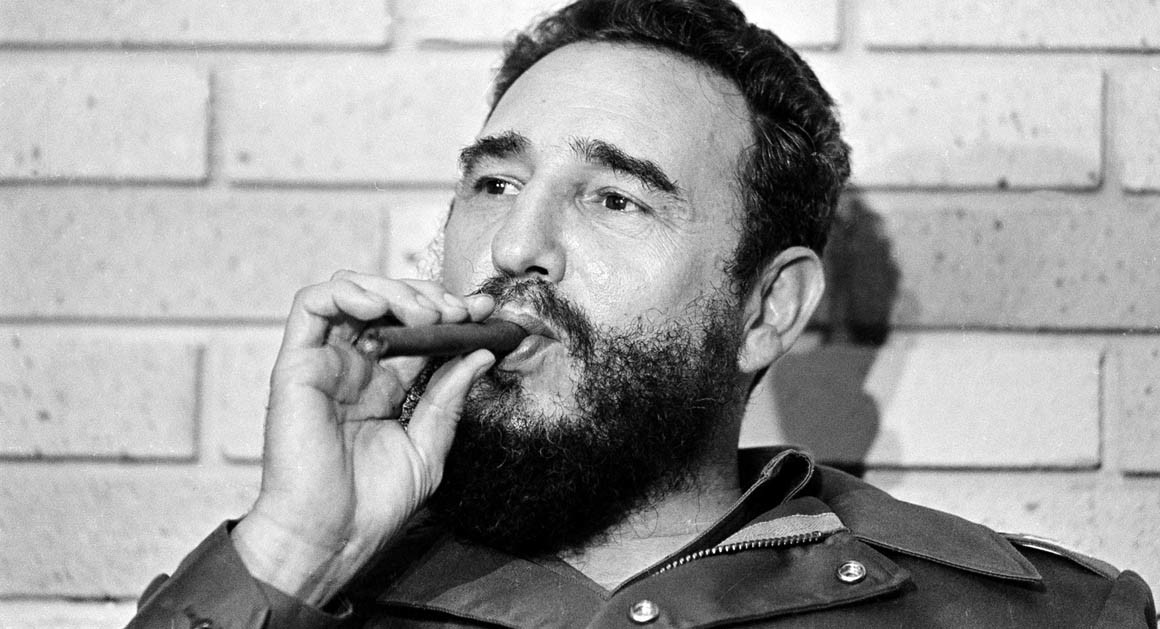
Fidel Castro died on November 25 at the age of 90, or, as our President-elect Donald J. Trump ignominiously put it, "Fidel Castro is dead!" Predictably, we have been treated to the unproductive debate that usually happens when a controversial figure dies, with both defenders and attackers rushing to put out their thoughts, many of which, from one side or another, will inevitably be oversimplified and of little use. So here I am, to take a strong stance on Fidel Castro and his legacy, and that stance is: ...eh. I can't say I'm really on either bandwagon in this case. The good and the bad that Castro did both seem obvious, and abundant--and, for me, Che Guevara is easily the more sympathetic and interesting of the figures in the Cuban Revolution. I have seen Castro praised as a hero, a champion of the oppressed, and a devoted friend of the poor on the one hand, and attacked as a cruel despot and heartless murderer on the other hand. And I guess this is one case where I kind of feel like both have fair points.
Castro in 1974 (Image from Politico)

As Pat Buchanan once said in a very different context, "Great men are rarely good men." The general principle is an important one: for instance, Napoleon may have been a war-hungry dictator, but you can thank him for many important advances in human history, such as his eponymous legal code, which offered codified law (then a fairly new idea), the end of hereditary nobility, legal equality, and separation of church and state, and influenced civil codes around the world in the 19th century. Similarly, Castro played a major role in reshaping Cuba in many positive ways, while still being, on the other hand, an authoritarian ruler who routinely violated human rights.

Castro's revolution overthrew Fulgencio Batista, a brutal (US-backed) dictator who, according to then-senator John F. Kennedy, "murdered 20,000 Cubans in 7 years - a greater proportion of the Cuban population than the proportion of Americans who died in both World Wars, and...turned democratic Cuba into a complete police state - destroying every individual liberty." Arthur Schlesinger wrote that "the corruption of the government, the brutality of the police, the regime's indifference to the needs of the people for education, medical care, housing, for social justice and economic opportunity-all these, in Cuba as elsewhere, constituted an open invitation to revolution." Batista had aligned himself with the wealthy elite in Cuba, as well as the American mafia, while economic inequality exploded. So no one can say that Castro et al. weren't justified in throwing out the old regime and wanting something new.

Nor can we say that Castro wasn't any better than Batista; Cuba can now boast of a lower infant mortality rate than the much-richer United States. Today, 99.8% of Cubans aged fifteen or older can read and write; the literacy rate was 76% under Batista, before being increased to approximately 96% by a highly successful literacy campaign under Castro in 1961. Then-Secretary-General of the UN Kofi Annan stated in 2000 that "Cuba should be the envy of many other nations, ostensibly far richer. [Cuba] demonstrates how much nations can do with the resources they have if they focus on the right priorities - health, education, and literacy." That's a far cry from Batista's style of governing.

And, given his role in opposing Apartheid, Castro earned the respect of Nelson Mandela, who we were all gushing over when he died a few years ago. And, of course, Malcolm X also met with him, as Colin Kaepernick recently reminded us. So it's not exactly like Castro's admirers are limited to leftist college students looking for some way to piss off conservatives. Those screaming at anyone who's said a word of praise about Castro should stop and think for a second about that.

Of course, we know why Castro got on the US establishment's bad side: he nationalized the property of American companies, seizing banks and oil refineries that were owned by big names like Shell and Chase Manhattan. And he became pals with our number one enemy at the time, the Soviet Union. Those, of course, are the real reasons that we've heard so much criticism of Castro from the intelligentsia, as opposed to the "reformer" King Abdullah of Saudi Arabia, who was at the head of one of the most repressive regimes on Earth--one which happens to be our ally (for petroleum-related reasons).

Many of Castro's critics like to minimize the legitimate good he did, while exaggerating the bad with casual Hitler comparisons, often dousing the whole deal with an unhealthy dose of hypocrisy. Take the insufferable Ted Cruz, who has attacked Castro as a "totalitarian tyrant," while just last year he praised Egypt's Sisi, who overthrew a democratically elected president and presided over a Tiananmen Square-style massacre of protestors. Significant historical events, shocking as they rightfully are, are deprived of useful context. For example, there's Khrushchev's account (disputed by Castro, who released a letter from the time that backs up his version of events) of how Castro asked him to launch a preemptive strike on the US during the Cuban missile crisis. Often left out, of course, is how we had tried to invade Cuba only a few years before, and for the years after that had engaged in a vicious terrorist war against it. If we had suffered the same things we had inflicted on Cuba, a "preemptive" strike against our aggressors would be a given—and to say that the US would destroy any country that invaded it, likely using nuclear weapons (as Castro proposes in his letter) seems to almost go without saying.

But the fact that many critics of Castro exaggerate or decontextualize his misdeeds certainly doesn't mean he wasn't guilty of any. For instance, while not as extreme as some rightists have painted it (in an attempt to exploit leftists' sympathy for LGBT+ rights), there was grave mistreatment of gays under Castro's regime. After a military draft was instituted, forced-labor camps were set up where those "unfit" for service were sent, forced to work long days and subjected to cruel mistreatment. Gays were one of the groups sent to these camps, along with many others, including Jehovah's Witnesses, Catholics, and other "delinquents" suspected of being insufficiently loyal to the cause of the Revolution. The thoroughly leftist Jean-Paul Sartre said that in Cuba, there were "no Jews, but there are homosexuals"--a harsh critique from an intellectual sympathetic to the cause of the Cuban Revolution. To his credit, Castro would later call this treatment of gays "a great injustice," but that acknowledgement certainly doesn't erase what happened.

And there should be no question that Castro was dictator, who engaged in the typical behaviors one can expect from that unfortunate type. Amnesty International reports that "[o]ver more than five decades documenting the state of human rights in Cuba, [we have] recorded a relentless campaign against those who dare to speak out against the Cuban government’s policies and practices." Castro promised free elections in 1959, and, of course, inexcusably reneged on that promise. Leftists and socialists who want to view Castro as a saint are far more marginal than the legions of intellectuals and commentators who want to demonize him, but as someone who is pretty well immersed in Left Twitter, I can say I have seen plenty of them there. At best, one has to think they are badly misguided; at worst, they are unconcerned with, or even hostile to, the rights and liberties that are crucial for a truly free society.

Castro continued the Leninist/Stalinist bastardization of Marxism that disregarded Marx's support for a truly democratic society and instead concentrated power in the hands of a party elite who claim to represent the will of the people. Marxists like Rosa Luxemburg, Anton Pannekoek, and Karl Kautsky had all criticized this deviation from early on, when it got its start in Lenin's Soviet Union, but unfortunately, it was that strain of Marxism that took hold in numerous countries around the world. Castro did little, if anything, to correct its authoritarianism and fundamentally undemocratic nature, and his regime in Cuba is certainly not what Karl Marx had hoped for.

So I view Castro's death only with a sort of ambivalence, content to leave the celebrating to those he unfairly victimized and the mourning to his family and the people whose lives he improved. Like many others, he leaves behind a complex legacy, badly oversimplified by both his defenders and detractors. As with most things, Castro's life, and his time in power, was not black or white, but some shade of gray. Just how dark or light that shade of gray is up for interpretation.

Update: I have updated this post to include to acknowledge Khrushchev's account of Castro's position on a preemptive strike against the US is disputed and seems to be challenged by a letter Castro later released.

Thursday, November 17, 2016

Trump's Victory: Looking on the Bright Side

On Tuesday of last week, an absolute disaster happened. Donald Trump, the worst presidential candidate either major party has coughed up in many years, managed to win the presidency. It was an unwelcome surprise to many, including myself. At this point, it is clear Trump has secured more than enough electoral votes to secure the presidency, winning Wisconsin, which no one expected, and Michigan, which was also thought to be a state that was leaning Democratic. Hillary Clinton, though, is the winner of the popular vote--the second time in sixteen years the archaic, Byzantine piece of shit that is the Electoral College denied the popular vote winner the presidency and handed it to someone that failed to win even a plurality of the people's votes. An institution designed by racist, rich white men who were afraid of the commoners has ensured the election of another racist rich white man. Ho, ho. The continuity that exists in American politics is striking sometimes.

Trump at his victory speech (image from CNN).
There are some immediate takeaways from this election. First, the Electoral College needs to be abolished--or it needs to be ensured that it awards the presidency to the popular vote winner--ASAP. Secondly, the DNC fucked it up majorly when they pulled out all the stops to ensure Clinton got the nomination. Her supporters always tried to scare away support from Sanders by saying that she was more electable. Look how that worked out. Ho, ho. Obviously we can also talk about major failures on the part of the polling industry, the media, and any other number of institutions. Unexpectedly, we have to perform an autopsy instead of holding an inauguration.

Election day and the day thereafter, when Trump was declared victor, mark dark days for America, particularly for those of us who are Muslim, LGBT+, Latinx, black, or just concerned with having a country that isn't run by a bloviating narcissist billionaire whose ego trip went further than even he could have probably ever expected. There's no getting around that. Donald Trump's election is a tragedy, and the people too blind to see it now might have to learn it the hard way by seeing how truly awful his presidency can be.

But that doesn't mean this result, as horrifying as it is, doesn't carry with it certain upsides. I'm not trying to paint it as a blessing in disguise; that it isn't. But few things are entirely good, or entirely bad. And elections are rarely, if ever, among them.

One of the major good things likely to come out of this election is the defeat of the Democratic Party establishment. Their candidate, Hillary Clinton, lost, which is bad news for many people, but very bad news for them. They'd bet everything on her, and she lost to a gag candidate. It's going to be awfully hard for them to come back from that. That means that in four years, we could be looking at a genuine anti-establishment progressive as Donald Trump's major opponent--the nominee of the Democratic Party, if the party still exists. It might seem petty to focus on this, as a Sanders supporter, but I maintain that Clinton was unlikely to bring the changes we need. If she was pushed hard, there was a chance she would take some steps in the right direction, but that's as much as I can say. On the other hand, we could very realistically have a genuine progressive in 2016, the same way George McGovern gained the Democratic Party nomination in 1972 after Hubert Humphrey, the establishment pick, lost the 1968 race. But unlike poor McGovern, who stumbled against a popular president and got crushed, our progressive would face a con man who, on the day of his election, had a favorability rating in the thirties. And imagine where it will be when the people who fell for his con realize they've been played for fools.

Another good thing: liberals hate Trump. As in hate. They rightly see him as a monster, not just an opponent. This is the sort of thing that radicalizes people--that pushes milquetoast liberals to more sweeping critiques of the status quo. If I hadn't despised the Republican Party under Obama so much, I might never have actually shifted to the left, reexamining sacred cows like capitalism and the state. Even if we don't see liberals all becoming radical socialists, the amount of hatred they have for Trump is enough to get them mobilized like they haven't been before. We saw a massive mobilization of support behind Bernie Sanders earlier this year. It might well take the sheer ugliness of a Trump presidency to provoke the reaction necessary to keep important segments of society--young people, ethnic minorities, LGBT+ people--truly, militantly organized, aggressively challenging the status quo in ways they weren't before.

What about the people who supported Trump? For me, there are two major groups there, and the correct attitude toward each is shown with unusual wisdom by a cartoon I stumbled upon on Twitter:


Indeed, the genuinely bigoted of Trump's supporters will not be of much use, until they abandon their bigotries, but those who voted for him because they are disenchanted with the political and economic status quo are people that should absolutely be reached out to. The good news about Trump's victory, with respect to them, is that they can now see for themselves what a con job the right-wing populism Trump ran on really is, and therefore be all the more skeptical of right-wing populists in the future, realizing that it is the left that offers the best prospects for replacing the status quo with something better and fairer.

While a Hillary Clinton presidency would have been far preferable on the whole to a Trump regime, it would have made it easy for liberal and left-leaning segments of the population to be too complacent, as they have been under Obama. But a Trump presidency might be enough to provoke a serious reaction against the unpopular, undemocratically elected maniac. This could be the day that a sleeping giant was awoken--one that wouldn't stop until it crushed Donald Trump and his Republicans, crushed the corporate centrists within the Democratic Party, and finally took hold of power in ways we haven't seen for a long time, if ever at all. Vive la Résistance.

Sunday, November 6, 2016

A Leftist Case for Voting Clinton

Let me first note that this post is directed at people who fundamentally agree with my politics to begin with, so if you overwhelmingly disagree with the views I've put forward on this blog, it might not be of much interest to you--but if you're curious, feel free to read on of course. The target audience here, though, is people who generally fall on the left side of the political spectrum, like myself, because the issue here is one that divides us leftists every time there's a presidential election: whether or not we should vote for the Democrat.

Photo Credit: AP; found at Business Insider
I have made my issues with Hillary Clinton abundantly clear, and I will briefly state again: I do not like Hillary Clinton, and I think she represents everything wrong with the Democratic Party. In fact, I think she's probably their worst presidential nominee in decades, and even in a campaign where her opponent, Donald Trump, is an absolutely vile being, she has still managed to alienate and disgust me over and over again. The arguments I'm about to make have nothing to do with any failure on my part to appreciate the grave misdeeds of Clinton's past (spearheading our disastrous and illegal intervention in Libya, voting for the even more disastrous and illegal Iraq War, the Constitution-shredding USA PATRIOT, and on, and on, and on). I am completely unenthusiastic about the prospects for what a Clinton presidency will look like, and quite concerned on some fronts, like the issue of Syria.

But, in spite of all of that, I have already cast my vote for Clinton (via absentee ballot). And, while I've been consistently opposed to attempts to shame leftists into voting for Clinton, I do have to say that I think it's the right choice, at least for those of us living in swing states (like myself) in an election as close as this one. I want to list here the most common arguments I hear from leftists against voting for Clinton, and lay out my response.

The argument: "She's no better than Trump."

My response: Yes, she is. I despise Hillary Clinton and everything she stands for, but she hasn't proposed banning Muslims from entering the country, deliberately killing terrorists' whole families, deporting every undocumented immigrant, undoing the small amount of progress we've made toward universal healthcare by repealing "Obamacare," cutting taxes on the richest Americans, and many, many of the other policies Trump has proposed. Yes, there are some similarities between these hideous ideas and some of her own policies--she's a big supporter of drone strikes, which have killed many innocents, she's been heartless at times in talking about immigrants, she's said single payer will never happen--but she is clearly not as toxic as Donald Trump is on these issues. She is also not affiliated with an ultrareactionary right-wing party that makes no effort to even pretend to care about the poor or working class, unlike Trump. Her candidacy has not invigorated white supremacists. The only issue where leftists often try to say that she might be worse than Trump is foreign policy, but the case for that is weak. Trump supported the Iraq War, and he supported intervening in Libya. He's argued for sending 20-30,000 troops to fight ISIS. And while he has, at times, sounded more reasonable than Clinton when it comes to Syria and Russia, his running mate is Mike Pence, who sounds even worse than Clinton, and Trump has shown a desire to let his vice president make all the decisions in that department. Trump would simply be a vastly more disastrous president than Hillary Clinton.

The argument: "Voting supports the system that currently exists."

My response: Abstaining is not a more effective way to change the system than voting. A very large portion of the electorate abstains in every presidential election, and the system is still pretty intact. Voting is the one very limited way in which the system is designed to be influenced by regular people; while this shows the need to push for changes in the system from outside of it, throwing out that one way to make your opinion matter while working within the system makes no strategic sense. The argument that by participating in the system you are somehow upholding it is simply not based in any empirical reality. Further, while I firmly believe that we need to have a system where the population does more than just vote, voting has absolutely played a major role in achieving positive changes throughout American history; it elected Abraham Lincoln, who played a decisive role in the abolition of slavery. It elected Franklin D. Roosevelt, who did a great deal to regulate business and help the poor and the elderly. It elected Lyndon B. Johnson, who pushed through the Civil Rights Act, as well as Medicare and Medicaid. I'm certainly not denying that you can find major flaws and misdeeds with these presidents, but the fact that they were elected was an important part of achieving enormously significant changes.

The argument: "Voting for the lesser of two evils just lets the Democrats keep moving rightward."

My response: We had an election in which a significant number of leftists abandoned the Democrats: the 2000 election. While there were a number of factors leading to Gore's "defeat," and yes, I think he was probably the rightful winner, it is simply true that, had a small percentage of Nader voters in Florida voted for Gore instead (or had a number of Nader voters in New Hampshire done the same), Gore would have won the presidency. The fact that Gore lost and a factor in his loss was clear disenchantment on the left did nothing to move the Democrats leftward. In fact, it just gave mainstream liberals ammunition to use against leftists and, particularly, Ralph Nader. Because of what happened in 2000, liberals have mercilessly painted leftists as impractical dipshits who represent a political dead-end, because they're too dumb to ever achieve the goals they have. The same will happen if this mistake is repeated.

The argument: "The lesser of two evils is still evil."

My response: Yes, but that doesn't change the value of the fact that they are a lesser evil. Opting for the less bad of your two options doesn't mean you've given it your personal seal of approval; if someone holds you up at gunpoint and offers you the choice to either hand over your money or get shot, the fact that you hand your money over to avoid getting shot doesn't mean you've somehow lent your approval to the robber's actions.

The argument: "We need to build a third party that's focused on serving the people, not the corporations."

While I agree that this is probably the best way to go about changing the system given how profoundly corrupt both major parties are, voting for an existing third party is obviously no guarantee that it will become a major player in future presidential or congressional elections, and it's possible to create a new party that will be a major player in the next presidential election, skipping the "spoiler" phase altogether. This has happened before: the Republican Party managed to come in second place in the first presidential election they participated in; so did Theodore Roosevelt's Bull Moose Party, in their first (and only) presidential election. The two biggest third parties in this election--the Green Party and the Libertarian Party--have both been around for decades, and never gotten more than a few percent of the vote in any presidential election. Either these parties do not represent the views of many Americans, or they are too poorly organized to get their message out effectively. We can't simply blame the two-party mentality for their failures, since Ross Perot managed to get almost twenty percent of the vote in 1992. Neither of these parties is going to fill the void that exists in our political system unless they change dramatically, and voting for either Jill Stein or Gary Johnson does nothing to even begin this process of necessary change.

Realistically, our best shot at a new viable political party would be either a collapse of one or both of the existing ones--like how the Republican Party rose after the collapse of the Whigs--or a split within one or both of the major parties, like the one that happened within the Democratic-Republican Party to give birth to the Democrats and the National Republican Party (the latter of which obviously didn't last). So far, neither of these things has happened, though it certainly looks possible that either or both could. But voting for a third-party candidate in this election does nothing to get us closer to either. While it would help either minor party to get five percent of the vote in this election and thus get access to public funding, there's no guarantee that would give them any real shot at winning the next election, and only the Libertarians look like they have a shot at meeting that threshold (based on the polls), and the Libertarian Party is not the left-wing party of the people you're looking for.

I've previously enunciated my disagreement with a lot of the standard arguments about why you have to vote, and I'm very much sympathetic with many the ideas behind not voting, but I don't think the arguments hold up. This election offers a real choice. The choice is not between good and bad, true--it's between bad and worse--but when you have two bad options, the normal and rational thing to do is pick the less bad option, which is Hillary Clinton in this case. Whatever positive consequences there are for sitting out the election or voting third party, if you're a voter in a swing state like myself, the potential negative consequence--Donald Trump getting elected--outweighs them. So, utterly cheerlessly, I urge those of you who live in swing states to vote for Hillary Clinton if you haven't already. The consequences of failing to do so could be awful.

UPDATE: I realize it sounds pretty short-sighted to blame the Green and Libertarian Parties' failures simply on poor organization or an unpopular message given their exclusion from the presidential debates and general marginalization in the media, which are undeniably factors in their lack of electoral success. However, I do think these parties are partly to blame for their own status, given that they have focused too much of their resources on promoting presidential candidates who have no chance of winning and not enough on trying to first win local offices in order to boost their credibility and effect changes on a municipal level.

Monday, October 17, 2016

Worst Election Ever

(Credit: Clinton image from The Huffington Post; Trump image from TheDuran.com, taken from theoddysseyonline.com)
One inspiring thing can be said about the 2016 presidential election as it currently stands: we have the first female major party nominee, and she looks increasingly likely to win. That is a significant thing without a doubt, given that only a century ago, women weren't even guaranteed the right to vote. Indeed, it would be great to see an article, particularly after Hillary Clinton gets elected (should she), that details the work that was done to take us from a country where women couldn't even vote, to one where a woman can get elected president.

But Hillary Clinton's nomination, and even her hypothetical election, are largely symbolic victories, for reasons I've detailed before. And once those symbolic victories are scraped away, we're left with something exceptionally bleak. Perhaps it isn't the worst presidential election in American history--we have had some pretty grim ones, and thankfully neither candidate in this election is openly championing the expansion of slavery, unlike in past elections--but it is the worst in a good while, that much is sure.

Andrew O'Hehir of Salon aptly compared our choice to the 2002 French presidential election, when the final round of voting pitted conservative president Jacques Chirac against ultranationalist anti-Semite xenophobe Jean-Marie Le Pen (whose somewhat less extreme, but far from benevolent, daughter is a major player in French politics today). The difference there was that the French people only had to suffer through two weeks knowing those two were their only options, while we've been stuck with the grim choice between Hillary Clinton and Donald Trump staring us in the face for months. The French also had the good sense to give Le Pen a mere 18% of the final vote, while our own far-right ultranationalist is sure to do far better than that in spite of everything that's happened. And Chirac had the foresight to oppose the Iraq War, which is more than you can say for Clinton, for that matter.

Just like in that election, we had a socialist candidate who should have made it to the final round of voting, but didn't, through flaws in the system--though the flaws in our system are far more intentionally built in than the ones that led to the ugly situation in France. Bernie Sanders was scandal-free, hadn't dirtied his hands by supporting the Iraq War or the PATRIOT Act, and represented a serious vision for progressive change, unlike Clinton. He was also the candidate the people wanted--his favorability was far better than hers, and he did better in head-to-head matchups against the Republicans. But the Democratic Party elites aren't ones to let something like democracy get in the way of what they want. They learned their lesson after George McGovern got the nomination in '72. They pulled every string they could to give Hillary the nomination, going so far that when their misdeeds came to light the DNC chair, soulless lizard Debbie Wasserman Schultz, had to resign in disgrace.

Sanders's campaign marked a high point in this election season, mobilizing young voters in a way that we can only hope continues on now that his candidacy is over. But that's over now, and we're faced with two of the least popular candidates in presidential election history. It's a cruel joke of a choice, given that there's no one to be excited about, and yet apathy could be disastrous give what's at stake. If Clinton is the lousiest the candidate the Democrats have had in maybe decades, Trump is the worst either party's come up with since the end of World War II.

Whatever faithful readers I have may know that I tried to put a more positive spin on the Trump campaign earlier this year, despite always finding him a disgusting human being and never supporting his bid for president. But it's obvious now that Trump is a con man, and I fell for at least some of his con. I thought some part of what he really represented was decent, even an improvement over what we've seen. But Trump stands for nothing aside from a lust for respect and power, and a hatred of anyone who's different than he is.

I have to admit that even after I began to see how truly dangerous and toxic he was, I still found Donald Trump's candidacy funny. I don't mean that I didn't see, and take seriously, the real damage it's done already, but the idea of an orange-skinned, crude, billionaire reality TV host as a serious contender for president was too goddam ridiculous not to laugh at. Trump's candidacy is something like when Abbie Hoffman's Yippies nominated Pigasus the pig for president in the '60s, and not just because in both cases the nominee is a swine.

But whatever humor there was has worn off now. Maybe it's the creepy, awful remarks he made in 2005 that just came out, maybe it was his petulant, infantile performance at the second debate. Trump's absurdity hasn't gone away, but it doesn't inspire laughter, even of the desperate, vaguely horrified kind it used to. It now strikes me as downright offensive that I have to take this idiot, whose candidacy still strikes me as a joke that went too far and has gone sour now, seriously. And it's downright infuriating that millions of people are willingly taking seriously the idea of a useless blowhard like Donald Trump being president.

Anton LaVey once said that "[i]t's too bad stupidity isn't painful." If it were, supporting Trump would be a searing agony, somewhere between pressing a red-hot poker to your flesh and amputating your own foot with a chainsaw. Donald Trump's supporters are misogynists, xenophobes, Islamophobes, racists, Nazis, and Klansmen. And some, I assume, are good people. As hard as I am on political figures, I try to avoid being too vicious to everyday people whose politics I dislike. But supporting Trump at this point is indefensible, if not morally, then just rationally.

Trump is the sort of candidate who shouldn't just lose, but should be ostracized like they used to do in Athens. Best that he be ostracized by the entire human race, sent away from Earth with a one-way ticket some desert wasteland planet that he can name after himself and rule over as king, just to appease his monstrous ego. Comparisons to Hitler are cliched in general and Trump has seen plenty, but they're all too appropriate in his case.

Given the sick monster that the Republicans nominated, I would love it if I could make my peace with the Democrat, as I did four years ago when I enthusiastically supported Obama as a way to keep Romney out of the White House, despite my serious misgivings about his views. But the memory of Clinton's smears on Sanders in the primary are too fresh, and she hasn't made it any easier to support her with her attempts to link Trump and Putin, which are based on little real evidence and harken back to the dark days of Joseph McCarthy warning about his opponents' loyalty to the Soviet Union. The Russia attack is also just a sly of further demonizing Putin, whom Clinton has already ludicrously compared to Hitler. Russia is our Foreign Enemy, and they have no respect for Our Democracy--be afraid. The best thing I can say about Clinton at this point is that she's exercised the minimal competence necessary to keep her ship afloat while the USS Trump has torpedoed itself, which it looks increasingly likely will be enough to win her the election.

In the last debate we got the pleasure of hearing Clinton defend her duplicity by referencing Abraham Lincoln, followed by Trump assuring her that she's no Lincoln. Lincoln's mummified corpse, meanwhile, laid in repose, as dead as the hopes that our next president could represent any salvation from the political hell this country has been condemned to. Yes, that is the worst thing about this election, and the reason I don't take too much solace in the thought that it will be over soon. We will have to live with the decision we make for the next four years. A Trump presidency would be a horrible disaster. Pence would probably make many of the decisions, which is bad enough,
but Trump's desire to silence his opponents and the toxicity of his bigoted statements should not be underestimated. A Clinton presidency looks to be four more years of Obama, minus the good bits--the Iran deal, the thaw in relations with Cuba. Considering how hard it was to get Obamacare passed when the Democrats held sixty seats in the Senate, Clinton's plans for healthcare and student debt, not too bold to begin with, don't have great odds of amounting to anything earth-shattering.

So here we are, then, in a presidential election where both candidates are worse than the current president, which I say as someone who's found plenty to dislike about Obama's policies. This is the first election in a long time that I could confidently say that about, and certainly the first I've lived through. I hope it's the last, but it's hard to know what to expect from American politics at this point. Better luck in four years, I guess. Until then, brace for the worst.